

Robot Material Reading: Alpha Mask and Alpha Blend
2026-11-05
Robot Material Reading: Alpha Mask and Alpha Blend
A robot illustration asset may contain an alpha value without producing the translucent appearance a learner expects. The material's alpha mode determines how that value is interpreted. In glTF 2.0, Alpha Mask and alpha blend describe different rendering rules: one uses a cutoff to decide coverage, while the other combines the material's output with the background. Reading the mode is therefore part of understanding the asset, before treating a screenshot as evidence of a material error.
Locate the material rule before interpreting the picture
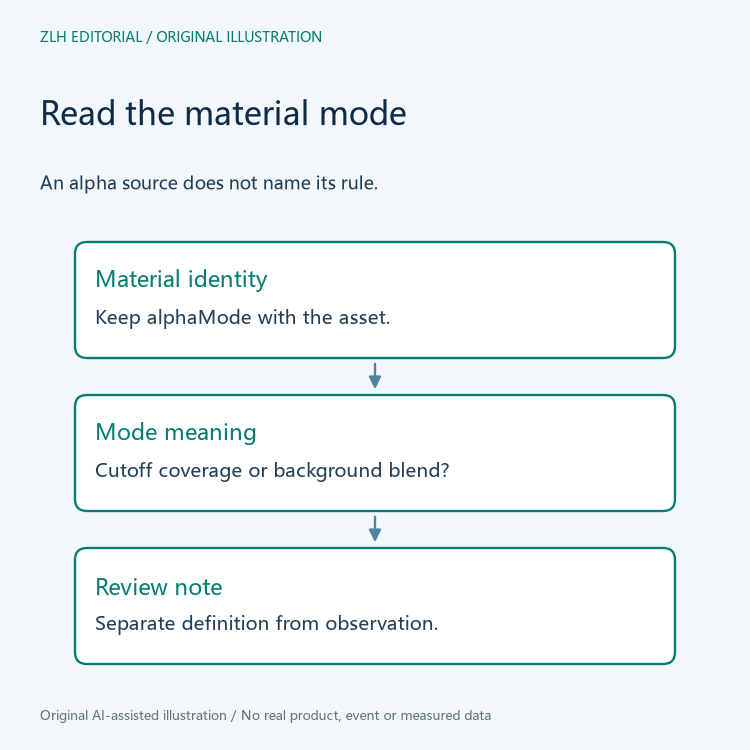
The glTF specification's Alpha Coverage section places the alpha value within the base color of its metallic-roughness material model. It then defines OPAQUE, MASK and BLEND interpretations. Those names belong to the material description. The mere presence of an alpha channel in an image does not identify which interpretation a supplied material uses.
For a robot visualization lesson, retain the material identity and the declared alphaMode alongside the texture or example image. A learner should not replace that field with a broad label such as transparent. That label can hide whether the author intended a cutout shape, a composited translucent appearance or an opaque material. This article reads definitions only; it imports no model and produces no tested rendering result.
The third named mode, OPAQUE, is a useful boundary check: the specification says that it ignores alpha and renders opaque output. An alpha source can therefore exist without controlling transparency under that mode. The schema also records OPAQUE as the default. When an excerpt omits alphaMode, a reviewer should inspect the actual material and applicable default rule instead of assuming that the presence of four color components automatically selects blending. That is a source-reading conclusion, with the implementation's actual displayed result still untested.
MASK uses a cutoff rather than partial coverage values
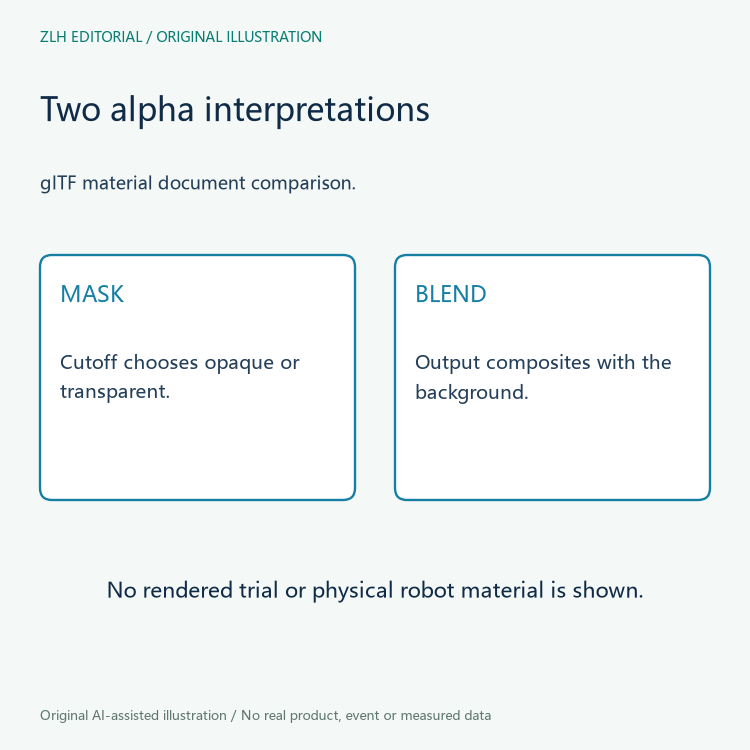
Under MASK, the specification defines the output as fully opaque or fully transparent according to alpha and alphaCutoff. Values at or above the cutoff produce opaque output, while lower values are transparent. The specification also allows implementation-specific edge techniques. A classroom explanation should therefore preserve the basic cutoff rule without promising identical edge pixels in every viewer.
The material schema confirms that alphaCutoff belongs to the MASK interpretation and must be ignored for other modes. A cutoff entry in a file is not sufficient to show that the active material uses it. The mode should be read first. This avoids an unproductive review in which a learner interprets a parameter outside its documented role and then reports that the viewer must have failed.
BLEND combines the output with its background
For BLEND, the specification describes combining the rendered output with the background through the over compositing operation. It does not define this as a thresholded cutout. Consequently, the same alpha source used under another mode can support a different appearance. A change in mode is a change in interpretation, rather than evidence that the underlying image file became a different physical material.
The real-time rasterizer note also explains that blend support involves implementation choices, including depth and sorting considerations. A source-based lesson should not claim a perfect, identical result across every rendering implementation. If a project needs a particular appearance, its actual asset, viewer and observation belong in a separate rendering account. The standard's definition alone does not supply that observation.
Use a fictional robot-panel material to expose the difference
Imagine a fictional robot illustration with a decorative perforated panel. Its author intends visible openings, but the handover description calls the material vaguely transparent and omits the mode. A reviewer can ask whether the asset intends cutoff coverage or compositing with the background. That question is answerable from the material definition before anyone claims that the model's geometry is damaged.
A second fictional illustration might intend a translucent cover. Its review needs the blend account, with the implementation context left visible. Neither example asserts that an actual robot has a perforated guard, a transparent enclosure or any particular protective property. These are visual-learning assets, and rendered appearance cannot establish the construction or suitability of physical equipment.
Keep the closing material note specific
A useful note records the material's declared mode, the alpha source and the cutoff only when it has the documented role. It should distinguish a source inspection from a viewer trial. If no trial was supplied, say that the interpretation has been clarified while the rendered result remains unobserved. That keeps a small documentation correction from becoming an invented cross-viewer compatibility finding.
The site's robot 3D learning materials and visual asset reading notes provide related examples. A precise Alpha Mask explanation preserves the cutoff question, and a precise blend explanation preserves the background-compositing question. Keeping both attached to the actual material rule helps learners discuss what the asset declares and what still needs to be observed.
Primary references: glTF 2.0 Alpha Coverage; Khronos glTF material schema.


